
DAEMON
DAEMON (pronounced "day-mon") is an opinionated terminal-based AI agent with distinct sci-fi theming, delivered through a highly performant TUI powered by OpenTUI.
It supports text and voice interaction, can be fully controlled through hotkeys and offers vim-like controls.
DAEMON is focused on information-gathering workflows that benefit from grounded responses but can also interact with and control your system through the terminal with scoped permissions.
https://github.com/user-attachments/assets/ee806e99-d522-445c-a617-60cbd29bbabc
Installation
npm i -g @makefinks/daemon --loglevel=error

# Additional installs (Audio)
brew install sox
Note: DAEMON requires Bun to be installed and available on your
PATH.
Then run with:
daemonImportant Notes
- Development also uses Bun (
curl -fsSL https://bun.sh/install | bash).- Windows is currently not supported (Only by using WSL - with minor issues)
See full installation details below for configuration and system dependencies.
Highlights
Interactive Avatar
At the core of the TUI is DAEMON's animated avatar, reacting to what it's doing in real time: listening to audio input, reasoning about questions, calling tools, and generating an answer.
The avatar was deliberately designed to feel slightly ominous and alien-like playing into sci-fi depictions.
LLMs
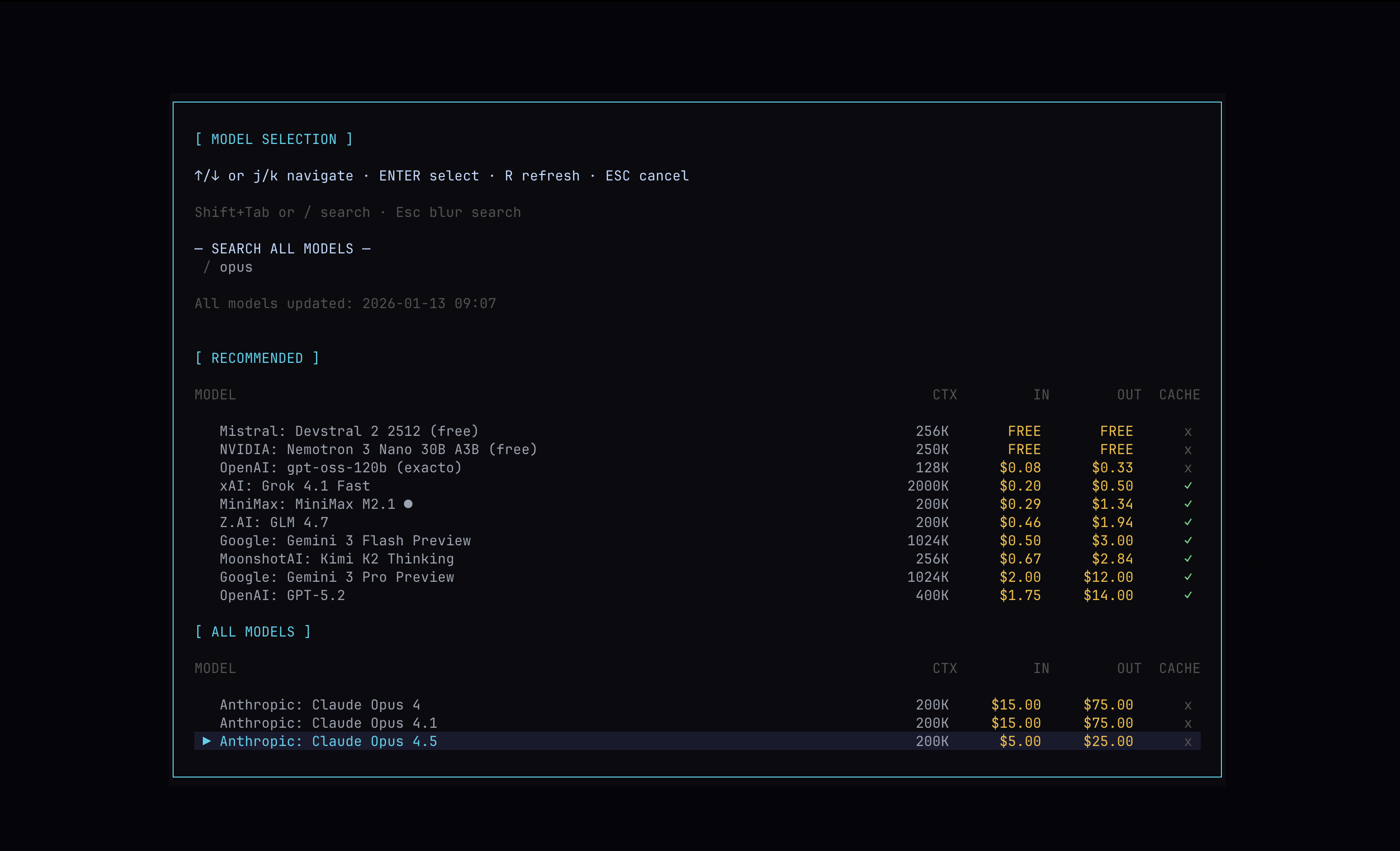
DAEMON supports three model backends:
- OpenRouter (API key based)
- OpenAI Codex (ChatGPT OAuth)
- GitHub Copilot (GitHub-authenticated via Copilot CLI / SDK) (Experimental!)
For OpenRouter, DAEMON can fetch and browse available models and route to a specific OpenRouter inference provider. For GitHub Copilot, DAEMON can use your Copilot subscription and list available Copilot models when authenticated.
Voice capabilities
Low-latency streaming transcription is achieved by using OpenAI's realtime model gpt-realtime-whisper via the Realtime WebSocket API.
OpenAI's TTS model gpt-4o-mini-tts-2025-03-20 is used to generate voice output with as little latency as possible.
Web Search with Grounding
DAEMON uses the Exa search and fetch API for retrieving accurate and up-to-date information.
After fetching relevant information, DAEMON has the ability to ground statements with source links that contain highlightable fragments. The TUI comes with a menu for reading, verifying and opening sources for the current session.
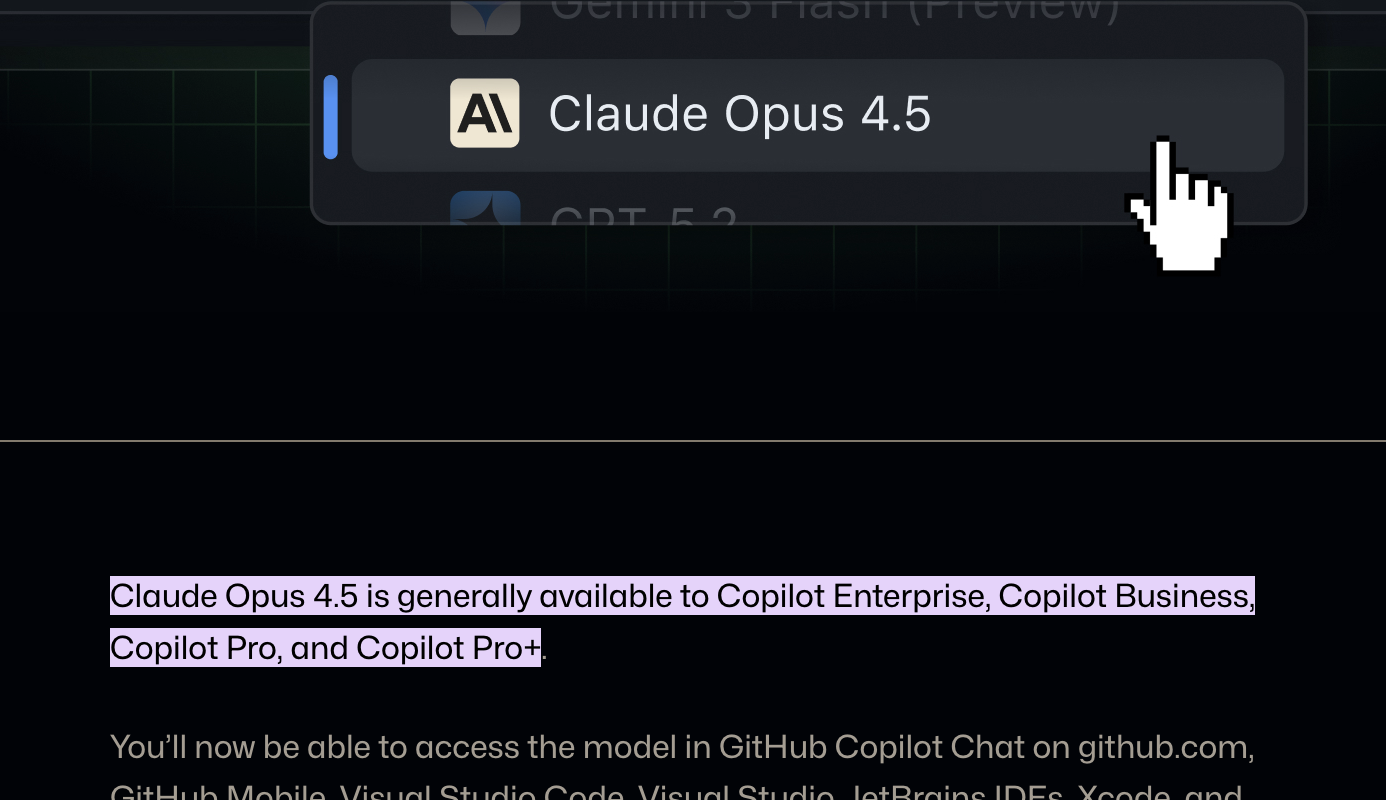
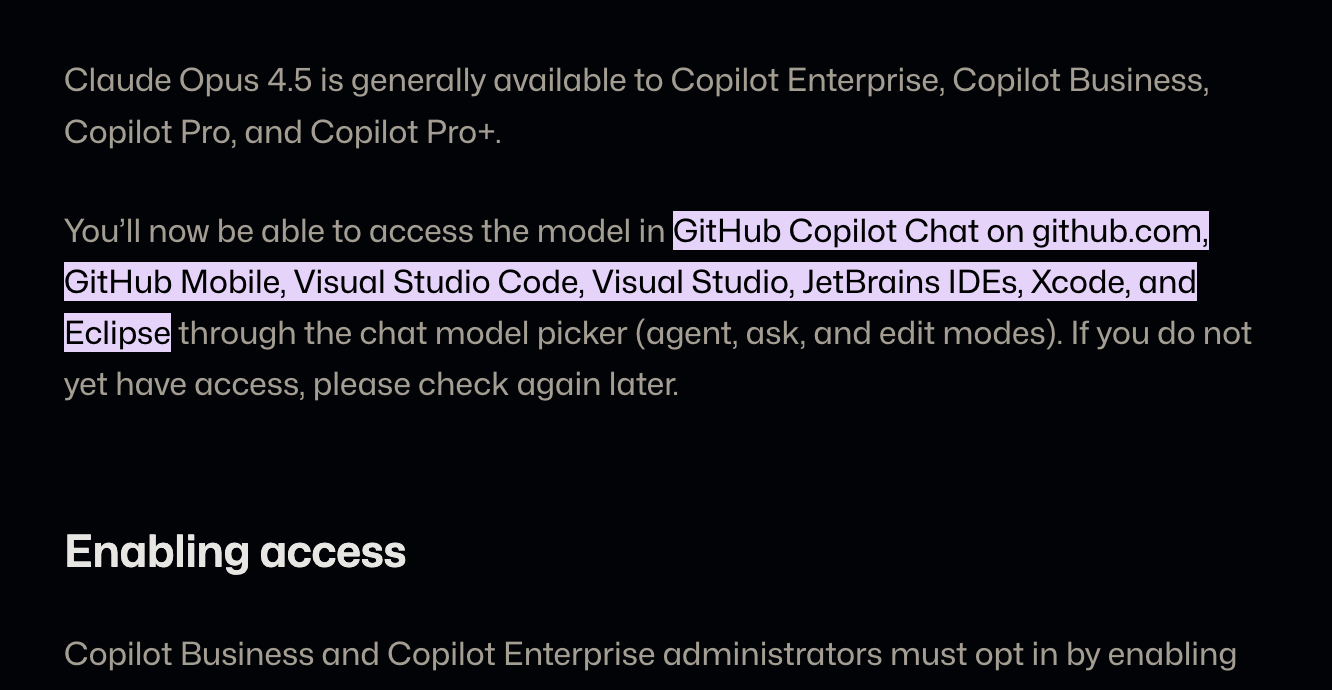
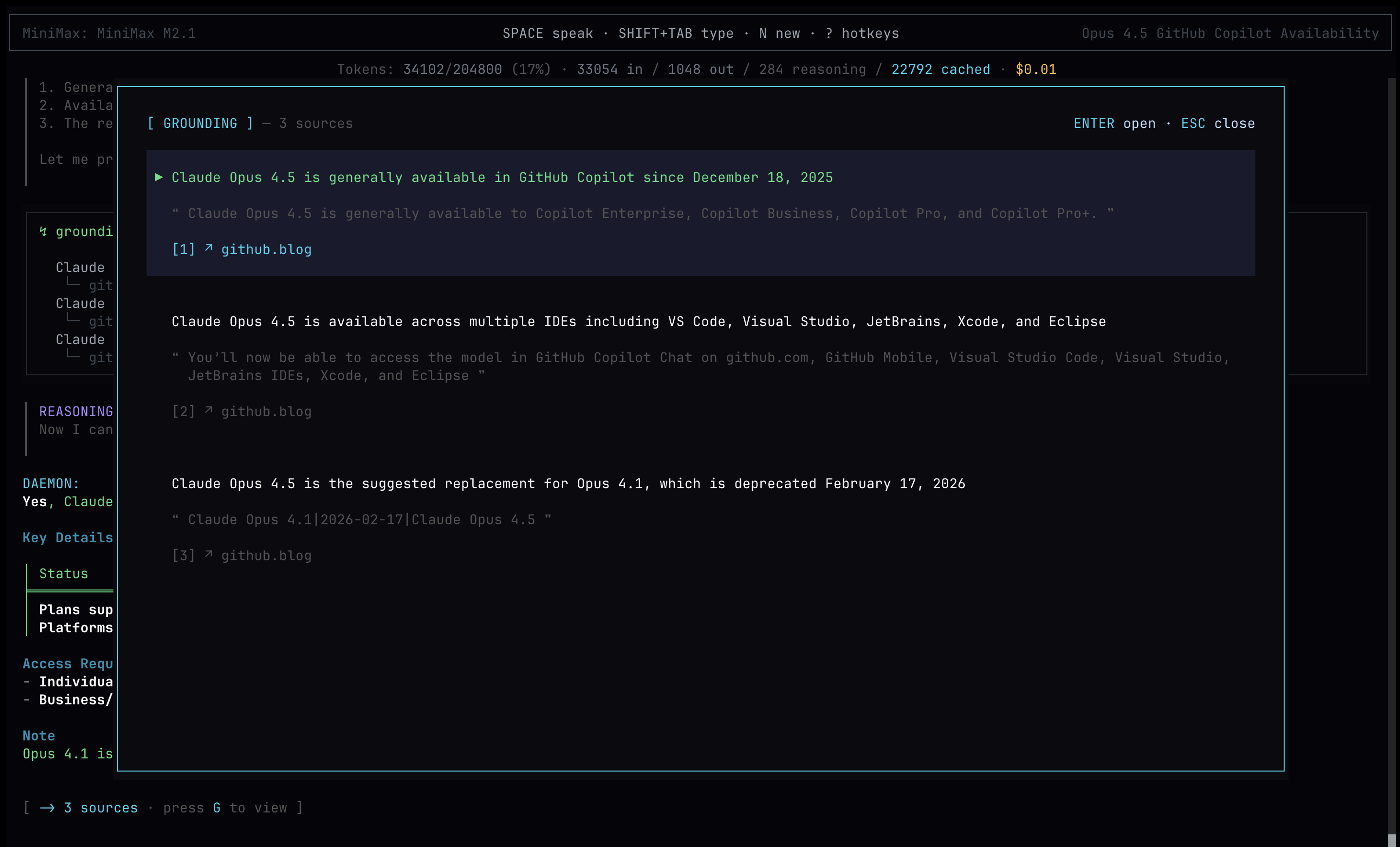 For most statements, pressing Enter opens the source in your browser and highlights the passage that supports the claim.
"Use the grounding tool" / "Ground your answers"
Session Persistence
DAEMON stores chat sessions locally (SQLite) and lets you resume past conversations.
Memory (mem0)
DAEMON can persist user-specific facts across sessions using mem0. Memory extraction runs automatically on user messages and relevant memories are injected into the conversation when helpful.
Feature List
| Feature | Description |
|---|---|
| Terminal TUI | OpenTUI-powered interface with sci-fi styling and hotkey controls. |
| Text + Voice | Supports text input and voice interaction with transcription and TTS. |
| Animated Avatar | Sci-fi avatar reacts to listening, tool use, and response generation. |
| Multi-Model Support | Works with OpenRouter, OpenAI Codex, and GitHub Copilot model backends. |
| Vision | Paste images into the input bar for vision-capable models, or read local image files. |
| Session Persistence | Preferences and chat sessions stored locally on disk. |
| Memory | Automatic persistance of user-specific facts with persistent recall using mem0 |
| Workspaces | Session-scoped on-disk workspaces for the agent to work in. |
| Web Search | Exa-based search and fetch for grounded, up-to-date info. |
| Code Search | Exa-powered code examples, API usage, and technical references. |
| Grounding | Text-fragment grounding with a dedicated UI. |
| Bash Execution | Bash integration with approval scoping for potentially dangerous commands. |
| Background Jobs | Long-running bash and subagent jobs run in the background. |
| Subagents | Delegate parallel subtasks to isolated subagents. |
| Headless Mode | Run daemon "your prompt" to execute a single prompt non-interactively. |
| Browser Tools | Built-in Puppeteer MCP for headless rendered-page work, browser inspection, and frontend debugging. |
| MCP | Model Context Protocol tools. |
| Agent Skills | Progressive-disclosure skills loaded on demand from user-configured directories. |
Install (npm)
DAEMON is published as a CLI package.
# Global npm install
npm i -g @makefinks/daemon --loglevel=error

# Then run
daemon
Note: Install Bun first if it is not already available on your
PATH.
Configuration is done via environment variables (or the onboarding UI):
OPENROUTER_API_KEY(required when OpenRouter is selected; required for Memory writes when Memory is enabled) - response generation via OpenRouter modelsEXA_API_KEY(optional) - enables web search + fetch grounding via ExaOPENAI_API_KEY(optional) - enables voice transcription + TTS; required for Memory embeddings/search
For Codex, sign in once from the Settings → OpenAI Codex Auth menu (or during onboarding).
For Copilot, authenticate once with either GitHub CLI or Copilot CLI:
gh auth login
# or
copilot login
GitHub Copilot authentication support is experimental.
Keys entered via the onboarding UI are stored locally in
~/.config/daemon/credentials.jsonwith restricted permissions (0600). For maximum security, use environment variables instead.
System dependencies
Voice input requires sox or other platform-specific audio libraries:
macOS
brew install soxLinux (Debian/Ubuntu)
sudo apt install sox libsox-fmt-pulseLinux (Fedora)
sudo dnf install sox sox-plugins-freeworldLinux (Arch)
sudo pacman -S soxMCP server setup (Model Context Protocol)
DAEMON can load MCP tools from external servers and expose them to the agent at runtime. Puppeteer MCP ships as a built-in default server and can be toggled from the Tools menu. Additional MCP servers are configured via a local config file.
Default config path:
- macOS/Linux:
~/.config/daemon/config.json
Example config:
{
  "mcpServers": [
    {
      "id": "local-mcp",
      "type": "http",
      "url": "http://localhost:3333/mcp"
    },
    {
      "type": "sse",
      "url": "https://example.com/mcp/sse"
    },
    {
      "id": "custom-stdio",
      "type": "stdio",
      "command": "npx",
      "args": ["-y", "some-mcp-server@latest"]
    }
  ]
}
Notes:
- The built-in Puppeteer server uses
npx -y @modelcontextprotocol/server-puppeteerand launches headless by default so background browser work does not disrupt you. - DAEMON can switch Puppeteer to a visible browser for source highlighting or visual checks by changing Puppeteer launch options during browser navigation, then switch back to headless for background work.
typemust behttp,sse, orstdio.urlis required forhttpandsseservers.commandis required forstdioservers, andargs,cwd, andenvare optional.idis optional; if omitted, DAEMON derives one from the host.- Defining a server with
id: "puppeteer"overrides the built-in Puppeteer config. - MCP server status, source, and enablement appear in the Tools menu.
Agent Skills
DAEMON supports Agent Skills for progressive disclosure of specialized instructions and resources. Skill names and descriptions are injected into the system prompt; the agent loads full instructions and resources on demand.
Create a skill by adding SKILL.md to ~/.config/daemon/skills/<name>/:
---
name: my-skill
description: Helps with example tasks. Use when the user asks for example workflow guidance.
---

# My Skill

Follow this workflow when the skill is relevant.